FFCE

Now Hiring: Are you a driven and motivated 1st Line Food Technologist?

FSSAI compliance

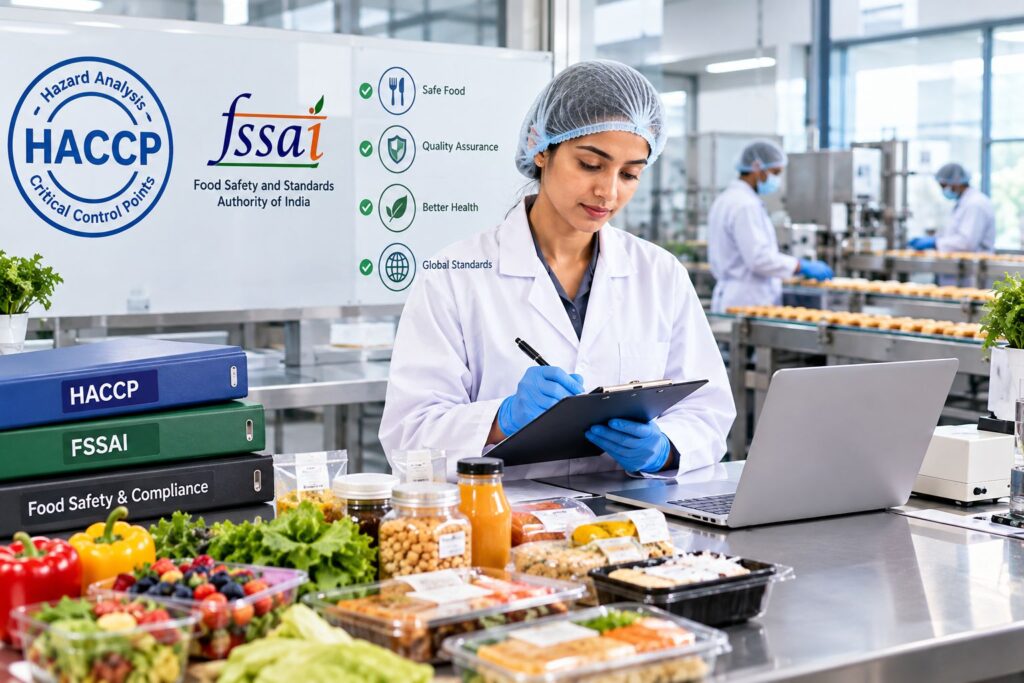
HACCP and FSSAI food safety certification process with a food consultant
FFCE

How to Get HACCP & FSSAI Certification – With Help from a Food Consultant

+Getting HACCP and FSSAI certification is important for food companies to achieve food compliance and food safety standards in India. A food consultant or food technologist can make this easier by providing you with the guidance you require for documentation, audits and system execution. They also know whether your food business activities meet national and international regulations. Introduction The two important pre-requisites certifications to legally operate a food business in India are: FSSAI (Food Safety and Standards Authority of India) & HACCP (Hazard Analysis Critical Control Points) certifications. Both certificates protect food safety and develop consumer confidence and make your business exports ready. However, it is not a simple task to get certified. There are food compliance protocols to adhere to, documentation process to consider and inspections to undergo. A food consultant or food technologist will be your best friend in this situation. With their technical experience, commercial knowledge and their understanding of the compliance environment, they can help guide your certification process and reduce the potential for delays that may end up being costly. Products developed 0 + Years experience 0 + Countries served 0 + Clients served 0 + What is FSSAI Certification? FSSAI is India’s top regulatory body for regulating food enterprises and enforcing food safety standards, mandatory for food enterprises to manufacture, process, pack, distribute, and sell. Any food enterprise irrespective of their food items is mandatory to have an FSSAI license. There are three types of FSSAI licenses based on the size of business:  • Basic Registration – for small food businesses (turnover < 12 lakh/year)  • State License – for medium-sized businesses (turnover 12 lakh – 20 crore)  • Central License – for large-sized businesses, and for export/import businesses. To obtain an FSSAI license, food businesses must complete the following steps: -Register their business -Complete Form B -Provide the layout of the premises and plan for equipment -Provide a list of food products -Provide a plan for a food safety management system -Provide a declaration and affidavits. A food consultant can assist you in gathering and preparing the documentation and can also identify the appropriate ‘category’ of registrations or licenses and submit the documents with no errors. What is HACCP Certification? Hazard Analysis Critical Control Point (HACCP) is a food safety management system that is recognized internationally, where hazards are identified and evaluated, and controlled. HACCP systems are not a legal requirement in India for all businesses, but ideally, HACCP is for businesses that want: -Maintain greater levels of food safety -Enhance their export opportunities -Comply to global standards (in particular European, USA, and Gulf standards). The steps involved with HACCP are: -Hazard analysis -Identifying critical control points (CCP) -Establish monitoring procedures -Maintain documentation and verification systems A food technologist has been trained to deal with the technical aspects of HACCP and are able to visit your facility, assess the facility, help you implement preventative measures, train your staff, and prepare a SOP’s and manuals to suit your operations. Why Work with a Food Consultant? Here’s how a food consultant or food technologist can ease your certification process: 1. Gap Analysis They will conduct an audit of your current systems to identify any deficiencies that would need to be addressed to be HACCP or FSSAI compliant. 2. Customized Documentation The food consultant will prepare customized documentation, including hazard plans and SOPs, that are tailored to your business processes while allowing for compliance. 3. Support with Implementation Not only will they support you in implementing necessary changes to your infrastructure but also meaningful hygiene practices, staff training, and sanitation practices essential for sustaining certification. 4. Preparing for Audit Your food consultant will prepare your team and assist you with preparing for both internal and external audits to ensure you have minimized opportunities of non-conformance. 5. Compliance Support Post-certification Food consultants can support with your annual renewals, upgrades, and continuous improvements of your food compliance standard. Conclusion Whether you are starting a new food business or scaling your existing food business, achieving food safety through HACCP and FSSAI certification should not be an option but a requirement. Using a food consultant or food technologist with experience in compliance will provide you with a time-efficient and less stressful way to make sure you achieve food compliance from day one. Investing in support is not just about achieving legislation compliance – it is about ensuring the food compliance of your brand, protecting your customers, and ultimately your future in food. Frequently Asked Questions Why do I need help of food consultant for both FSSAI and HACCP certification?A food consultant helps you understand complex regulatory requirements, prepare appropriate documentation and they will provide steps for an audit, all to have complete food compliance to achieve a smooth and quick certification. How does a food technologist make a difference in helping me achieve food safety standards?A food technologist uses their scientific and technical expertise to improve hygiene, identify hazards and implement the necessary food safety procedures (as needed for HACCP and FSSAI compliance obligated). Is HACCP obligatory for food businesses in India? HACCP is inconsistent for all businesses under Indian law, as it is not obligatory, but many businesses involved in exports, large manufacturers and businesses wanting to demonstrate advanced food safety systems have access directly to HACCP standards recommended. What is the full process for obtaining FSSAI certification?After you select the right licensing type, you will: Fill out the documents: i.e. Form B, layout of the facility, list of products or food types, plan for food safety management, after this fill out all obligations for food compliance inspection.

Food product labelling with FSSAI compliance information and nutritional details
FFCE

Importance of Food Labelling

Food labelling is not simply design or snazzy wording – it is an essential component of food safety, compliance, and consumer trust.  In India, the regulations on food labelling are bolded by the Food Safety and Standards Authority of India (FSSAI), which is a compliance requirement for all food labelling in their products, which is an important check point in both approvals and launch to market for food business operators (FBO).  In many cases, getting labelling correct is just as important as the formulation of the product itself, since errors can lead to costly penalties, recalls of product, and loss of consumer trust.  This is where a food expert like Frontline Food Consultants and Engineers (FFCE) can add great value to the project. Why Food Labelling Matters Regulatory Compliance The food label is the first acceptable evidence of compliance within FSSAI regulations; it conveys that the food item is safe for human consumption and has passed along all required information to the consumer. Consumer Transparency Labels provide consumers with the information they need to make their own informed decisions containing ingredients, allergens, nutritional information, and claims, (for example, “low fat”, or “high in protein”). Market Positioning An effective label delivers the brand’s promise to the consumer, fosters trust and builds the separation of a product in a crowded marketplace. Traceability and Accountability Labels, in the case of food safety investigations or recalls, provide evidence in the form of accountability. Technical Aspects of Food Labelling under FSSAI The Food Safety and Standards (Labelling and Display) Regulations, 2020 require the following technical elements to be in practice: Compulsory Information Product Name: Food and beverage names ought to be informative and clear (for example: Mango Flavoured Carbonated Drink). List of Ingredients: A list of ingredients must be given in descending order of weight/volume as they were at the time of manufacture. Nutrition Information (per 100g/ml and per serving): Energy (kcals) Protein (g) Carbohydrate (g) (with a separate declaration of sugar.) Fat (g) (with a separate declaration of saturated and trans fat.) Sodium (mg) FSSAI Logo and License Number, providing traceability. Allergen Declaration: Required for, but not limited to gluten, soy, nuts, milk, fish etc. Veg/Non-Veg Symbol: Green/Red logo according to ingredient source. Net Quantity: By weight, measure or count. Date Marking: “Best Before” and “Use By” detail. Batch Number/Lot Number/Code Number. Manufacturer Details including, name, address and contact details. Front-of-Pack Labelling (FoPL) For packaged products that contain high fat sugar or salt (HFSS), the FoPL guidelines require identifying nutritional thresholds. Health logos or health warnings may soon become mandatory in India according to global best practices. Health Claims and Declarations Claims such as “Low Fat” “Sugar-Free” “High Protein” or “Fortified” where NuL is labelled must be evidence based and must meet FSSAI thresholds. False or deceptive health claims are subject to penalties. Type size, contrast and legibility The FoPL guidelines require prescribed minimum type sizes for mandatory information included on the labels. The labels must maintain legibility and should not be removable or incapable of being removed from the packages by the normal handling of the product. Additional Labelling for Certain Foods Infant food, dietary supplements, nutraceuticals – require cautionary and voluntary advisory and statement acknowledgments that the additional statements are not warnings. Imported food – in addition to the above labelling requirements, must meet labelling that is prescribed under the import regulations. Pain Points in Food Labelling for Businesses Constantly changing FSSAI strategies mean FBOs must regularly update their labeling. Inaccurate or incomplete labels can result in product rejections at the approval stage. Conforming to regulations, while ensuring a good label aesthetic must be a technically balanced label design. Dietary Calculations and ingredient declarations are often specialized based on scientific knowledge. Role of Food Consultants like FFCE This is where Frontline Food Consultants and Engineers (FFCE) provide significant value:. Regulatory Requirements: FFCE performs all tasks needed to ensure that your labels are compliant with the most up to date FSSAI, Codex Alimentarius or international standards if it is to be exported. Nutritional Panel: Use both software and laboratory testing to effectively calculate and format your nutrition panel. Ingredient and Allergen Mapping: Ensure full declaration of all minor ingredients, adding agents or processing aids. Packaging Support: Work with the packaging teams to design labels that marry compliance considerations with brand identity. Claim Verification: Supporting the business to provide scientifically based verification of claims, and to ensure any claims made can be supported such as “immunity boosting”, “high protein”, or “fortified vitamins”. Extending into the Global Market: For businesses with an aim to export, FFCE will assist in aligning labeling with regulatory requirements such as FDA (USA), EFSA (Europe) or GCC (Middle East). Future of Food Labelling in India Digital Labelling & QR Codes:  Future-ready options will include QR codes, which can offer traceability, sourcing information and additional nutritional information. Smart Labelling:  AI-based, consumer-driven recommendations. Sustainability-focused Tags:  Carbon footprint, water usage and environmental labels are now coming into play. Conclusion Food labelling in India has transitioned from a formality for compliance purposes to an essential reputation builder, a method of establishing trust with consumers, a brand identifier and an agency of food safety. As consumer awareness has increased and evolution of FSSAI regulations continue, there is no margin for error or vagueness in labelling. Partnering with the experts like Frontline Food Consultants and Engineers (FFCE), makes it easy for businesses to know that every product they launch into the market will be compliant, transparent, market ready and globally competitive.

Need Help?
Scroll to Top

Your Trusted Food-Tech Partner Simplifying Solutions, Maximising Success

    Your idea is 100% protected by our Non Disclosure Agreement

    Your Trusted Food-Tech Partner Simplifying Solutions, Maximising Success

      Your idea is 100% protected by our Non Disclosure Agreement

      Your Trusted Food-Tech Partner Simplifying Solutions, Maximising Success

        Your idea is 100% protected by our Non Disclosure Agreement

        Powering your food business forward